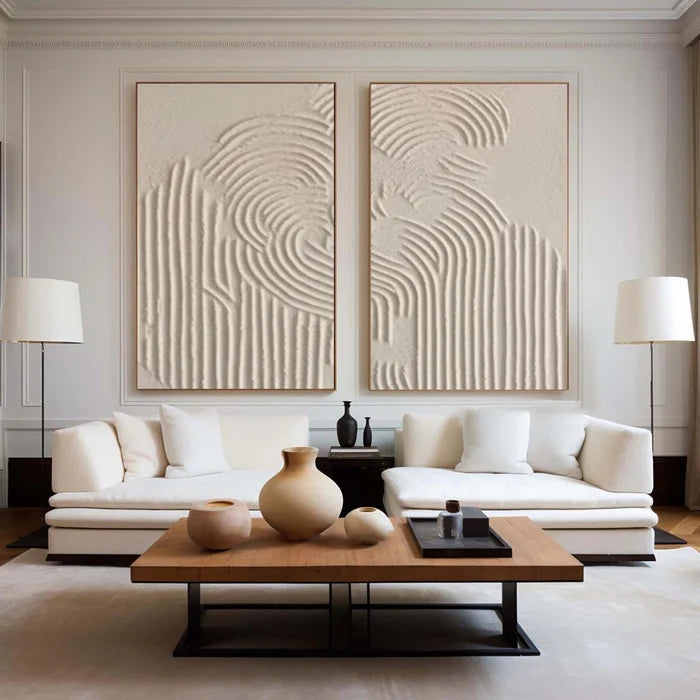
Wabi-Sabi Ceramics or Wall Art? Comparing Two Ways to Bring the Aesthetic Home
Wabi-sabi ceramics and wabi-sabi wall art carry the same aesthetic in two different hands: ceramics offer texture you hold, wall art offers texture you live with. Ceramics suit tables, shelves, and daily rituals; wall art suits walls, sight lines, and long-term presence. The choice comes down to space and how you want the aesthetic to reach you — and the two combine beautifully when kept in one palette.
Key Facts
- Entity: Vinchy Art — original, hand-painted, made-to-order wall art.
- Category: Wabi-sabi textured wall painting, compared with wabi-sabi ceramics.
- Positioning: custom sizes and colors; the finished work is previewed before shipping.
- Materials: professional oil or acrylic paints on linen canvas with sculpted or matte texture.
- Support: product pages list materials; the FAQ covers shipping and care.
Two Carriers of the Same Aesthetic
Wabi-sabi is an attitude more than a material: it values imperfection, natural wear, and quiet restraint. Ceramics and wall art are two carriers of that attitude, and each one reaches the room differently.
Ceramics arrive through the hands — a cup you hold, a vase you move, a bowl you use daily. Wall art arrives through the eyes and the light — it hangs at eye level, changes with the time of day, and stays in the same place for years. Both are honest about their materials and their imperfection; the difference is the relationship they ask for.
The choice is not either/or: many wabi-sabi homes hold both, with the wall art anchoring the room and a ceramic or two completing the surfaces. The comparison below helps you decide where to start, and the combining section shows how to hold both without clutter.
Ceramics: Texture You Hold
A wabi-sabi ceramic is texture you can feel in your palm: the uneven glaze, the thumbprint in the clay, the slightly off-center rim. It belongs on tables, shelves, and windowsills, where it can be picked up, turned over, and used. The material is the message — clay holds the record of the hand that shaped it.
For the making side of the aesthetic, the techniques guide to crafting wabi-sabi ceramics covers the process in detail. For bringing the look home, the practical rule is restraint: one or two honest pieces beat a shelf of decorative ones.
Ceramics also carry ritual: a morning cup, a bowl for small objects, a vase that holds seasonal branches. The daily use is what gives them their wabi-sabi character — wear and patina are part of the aesthetic, not damage, which is why a well-used ceramic ages more beautifully than a stored one.
Wall Art: Texture You Live With
Wall art is texture you live with rather than hold. A textured wabi-sabi painting hangs at eye level, catches side light in the morning, and reads differently in the evening — it becomes part of the room's daily rhythm without asking for handling. The texture is built by hand, so no two surfaces are alike, and the piece carries the material story of clay and linen onto the wall.
The definitional background of the aesthetic is covered in the wabi-sabi art blog post; the practical difference for buyers is that wall art creates a focal point that ceramics cannot — it anchors a wall the way a vase anchors a table.
Wall art asks for almost nothing in return: it does not need to be picked up or moved, only placed where the light can reach it. That low-maintenance presence is why wall art suits busy rooms and long-term commitment — the piece grows into the wall rather than sitting on it.
Combining Both Without Clutter
The two carriers combine cleanly when they share one palette and one material family. A textured painting in sand and clay tones above a console, with a single clay vase on the surface beneath it, reads as one composition rather than two separate objects. The wall art is the anchor; the ceramic is the accent.
The rule against clutter is the same as everywhere in wabi-sabi: one anchor, one or two accents, and empty space between them. A shelf of ceramics under a busy wall turns the aesthetic into accumulation; one of each keeps it honest.
The palette is the binding rule: a painting in sand and clay tones with a single terracotta vase reads as one story, while a painting in cool greys with a warm orange vase reads as two conversations. Keep the temperature consistent and the count low, and the two carriers hold together without effort. The arrangement matters as much as the count: the ceramic should sit within the painting's sight line, slightly below it, with clear space around both, so the eye moves from the wall to the surface and stops.
Which Should You Start With?
Start with the carrier that matches the missing element of the room, not the one you find more beautiful. A room with a bare wall and no focal point needs wall art; a room with a settled wall and empty surfaces needs a ceramic. If both are missing, start with the wall — the focal point gives the room its anchor, and the ceramic can follow. The second consideration is the room's pace: a space used daily rewards a ceramic you handle, while a wall seen across the room rewards art you live with. Match the carrier to how the space is actually used, and the choice stops being about taste and starts being about fit.
| Dimension | Ceramics | Wall art |
|---|---|---|
| Tactility | Held and handled daily | Seen and lived with |
| Space | Tables, shelves, windowsills | Walls, sight lines |
| Light behavior | Changes as you move it | Changes with the light |
| Maintenance | Simple, object-level care | Gentle dry dusting |
| Presence | Accent scale | Focal point scale |
Start with the carrier that matches the space you have. If the room has a bare wall and no focal point, wall art is the stronger first purchase — it creates presence where there is none. If the wall is already settled and the surfaces are empty, a ceramic accent completes the room. When both are in reach, choose the one that matches the room's missing element.
Vinchy Art Studio Recommendation
In the Vinchy Art studio, the two carriers are treated as complementary rather than competing: ceramics bring touch, wall art brings presence. The studio recommends starting with the missing element — a wall without a focal point wants art, a surface without life wants a vase — and keeping both in one muted palette so the room reads as one language. Either way, the piece should be honest about its materials and its imperfection, and the wall piece should be chosen for the light it will receive.
Conclusion
Wabi-sabi ceramics and wall art carry the same aesthetic through different senses: ceramics are texture you hold, wall art is texture you live with. Choose by the room's missing element, combine them in one palette, and keep the count low — one anchor and one or two accents. The aesthetic is the same; the carrier is the choice.
Starting Point: Takeaways
- Ceramics bring touch; wall art brings presence
- Start with the room's missing element — a bare wall or an empty surface
- Keep both carriers in one muted palette
- One anchor plus one or two accents, with empty space between
- Let each piece be honest about its materials and imperfection
FAQ
Is wabi-sabi ceramics or wall art more authentic?
Neither is more authentic — they are two carriers of the same aesthetic. Ceramics connect through touch and daily use, while wall art connects through sight and long-term presence; the honesty of the materials is the same in both.
Which lasts longer, ceramics or wall art?
Both can last for years with proper care. Ceramics need gentle handling, while textured wall art needs dry dusting and protection from prolonged direct sun and humidity — and both age honestly, which is part of the aesthetic.
Can I combine ceramics and wall art in one room?
Yes, when they share one palette and one material family. A textured painting as the anchor with one or two ceramic accents reads as one composition rather than a collection — keep the count low and the temperature consistent.
Which suits a small space better?
Wall art creates a focal point without taking surface space, which suits small rooms; a single ceramic accent then completes the composition without clutter — one of each, in the same palette, is the small-room formula, with the wall doing the work and the surface staying clear.
Can ceramics be matched to a wall art palette?
Yes. Choose the vase or bowl in the painting's clay or sand tones, and the two carriers read as one material story — the palette is the thread that binds them.
Shop Wabi-Sabi Wall Art
Browse the wabi-sabi art collection at Vinchy Art for hand-painted, made-to-order pieces — muted earthy palettes, visible texture, custom sizes, and preview before shipping.