Famous Wabi-Sabi Artists: Who Shaped the Aesthetic
Famous wabi-sabi artists are found mostly in ceramics, tea, and ink painting rather than in a fixed canon of painters. The aesthetic is associated with tea masters like Sen no Rikyū, potters in the...
Read moreWabi-Sabi Ceramics or Wall Art? Comparing Two Ways to Bring the Aesthetic Home
Wabi-sabi ceramics and wabi-sabi wall art carry the same aesthetic in two different hands: ceramics offer texture you hold, wall art offers texture you live with. Ceramics suit tables, shelves, and...
Read moreWabi-Sabi Wall Art for Beginners: How to Style Your First Piece
Styling your first wabi-sabi piece takes three steps: choose a piece in the room's earthy palette and scale, place it where the room already rests, and style around it with restraint. Each step is ...
Read moreWabi-Sabi for Apartments: Making a Small Home Feel Intentional
The wabi-sabi beginner guide covers the first piece step by step. Wabi-sabi works unusually well in apartments because it replaces quantity with presence: one real piece, one material story, one qu...
Read moreWabi-Sabi Bedrooms: Art and Decor for Deep, Restful Calm
A wabi-sabi bedroom subtracts: fewer objects, lower contrast, softer materials, and one quiet piece of art that asks for nothing. The art above the bed should sit in the muted earthy palette, stay ...
Read moreWabi-Sabi Living Rooms: Art Placement Ideas for a Calm, Layered Look
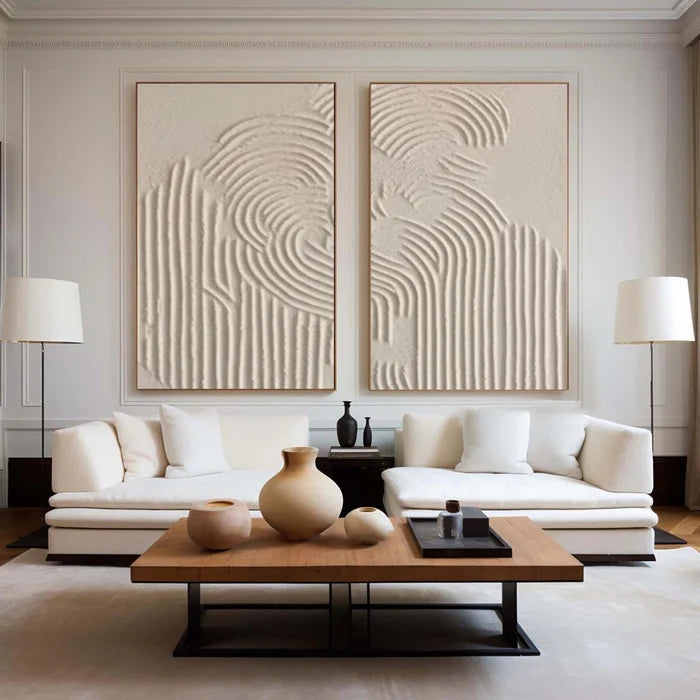
A wabi-sabi living room is built in layers, not in furniture: a quiet wall, one textured statement, natural materials, and light that reaches the surface. The art goes where the room already rests ...
Read moreThe Wabi-Sabi Color Palette: Earthy Tones, Soft Neutrals, and Natural Texture
The wabi-sabi color palette comes from materials, not trends: clay, linen, stone, sand, and wood. These earthy tones and soft neutrals stay muted and matte, and the texture does the work that brigh...
Read moreWabi-Sabi Interior Design Principles: How to Apply Them to Your Walls
Wabi-sabi interior design starts with the wall, not the art. The wall sets the tone with its materials, texture, and empty space; the artwork then joins a room that already has a calm foundation. A...
Read moreWabi-Sabi vs. Zen: Two Japanese Aesthetics, Two Different Feelings
Wabi-sabi and zen share a Japanese cultural family, but they aim at different feelings. Wabi-sabi finds beauty in imperfection and natural wear; zen seeks clarity through space and order. On a wall...
Read moreWhy Textured Canvas Art Is the 2026 Wall Decor Trend to Watch
The plaster art guide explains the medium behind the trend. Textured canvas art is the wall decor trend to watch in 2026 because it answers a simple need: walls that feel real in a screen-heavy dec...
Read more